Introduction: Why HIPAA Compliance Is Non-Negotiable
Healthcare organizations operate in one of the most heavily regulated environments in the United States. Patient trust, regulatory oversight, and legal exposure all converge around one critical responsibility: protecting patient data.
The Health Insurance Portability and Accountability Act (HIPAA) governs how protected health information (PHI) is accessed, transmitted, and stored. While many organizations focus on electronic medical records and IT systems, phone calls remain one of the most common—and most vulnerable—channels for PHI exposure.
That’s why a HIPAA-compliant contact center is not optional. It is a core operational safeguard.
In this article, we break down what a HIPAA-compliant contact center actually does, how PHI-compliant workflows reduce risk, and why healthcare call center outsourcing has become a strategic necessity for providers, clinics, telemedicine platforms, and healthcare vendors.
Table of Contents
-
Introduction: Why HIPAA Compliance Is Non-Negotiable
-
What HIPAA Compliance Really Means for Contact Centers
-
The Role of a HIPAA Call Center in Healthcare Operations
-
How PHI Is Handled in a Compliant Contact Center
-
Risk Mitigation Through Secure Call Center Workflows
-
Why Healthcare Organizations Outsource Call Center Support
-
Medical Answering Services vs General Call Centers
-
Compliance Failures and Their Real-World Consequences
-
HIPAA-Compliant Call Center Technology and Infrastructure
-
Training Requirements for HIPAA-Compliant Agents
-
Use Cases for Healthcare Call Center Outsourcing
-
Why U.S.-Based HIPAA Call Centers Matter
-
How TeleDirect Supports HIPAA-Compliant Healthcare Communication
-
Conclusion
-
Call to Action
-
Frequently Asked Questions (FAQs)
What HIPAA Compliance Really Means for Contact Centers
HIPAA compliance is not a label—it’s an operational discipline.
For contact centers, compliance means ensuring that every interaction involving PHI is protected, regardless of whether the call involves scheduling, intake, billing, or general inquiries.
A HIPAA-compliant call center must address:
-
Administrative safeguards
-
Technical safeguards
-
Physical safeguards
These safeguards apply not only to systems, but to people, processes, and daily workflows.
Compliance includes:
-
Controlled access to systems
-
Secure authentication procedures
-
Encryption of data in transit
-
Restricted agent permissions
-
Documented policies and training
-
Ongoing monitoring and auditing
Without these measures, even a simple phone call can become a compliance violation.
The Role of a HIPAA Call Center in Healthcare Operations
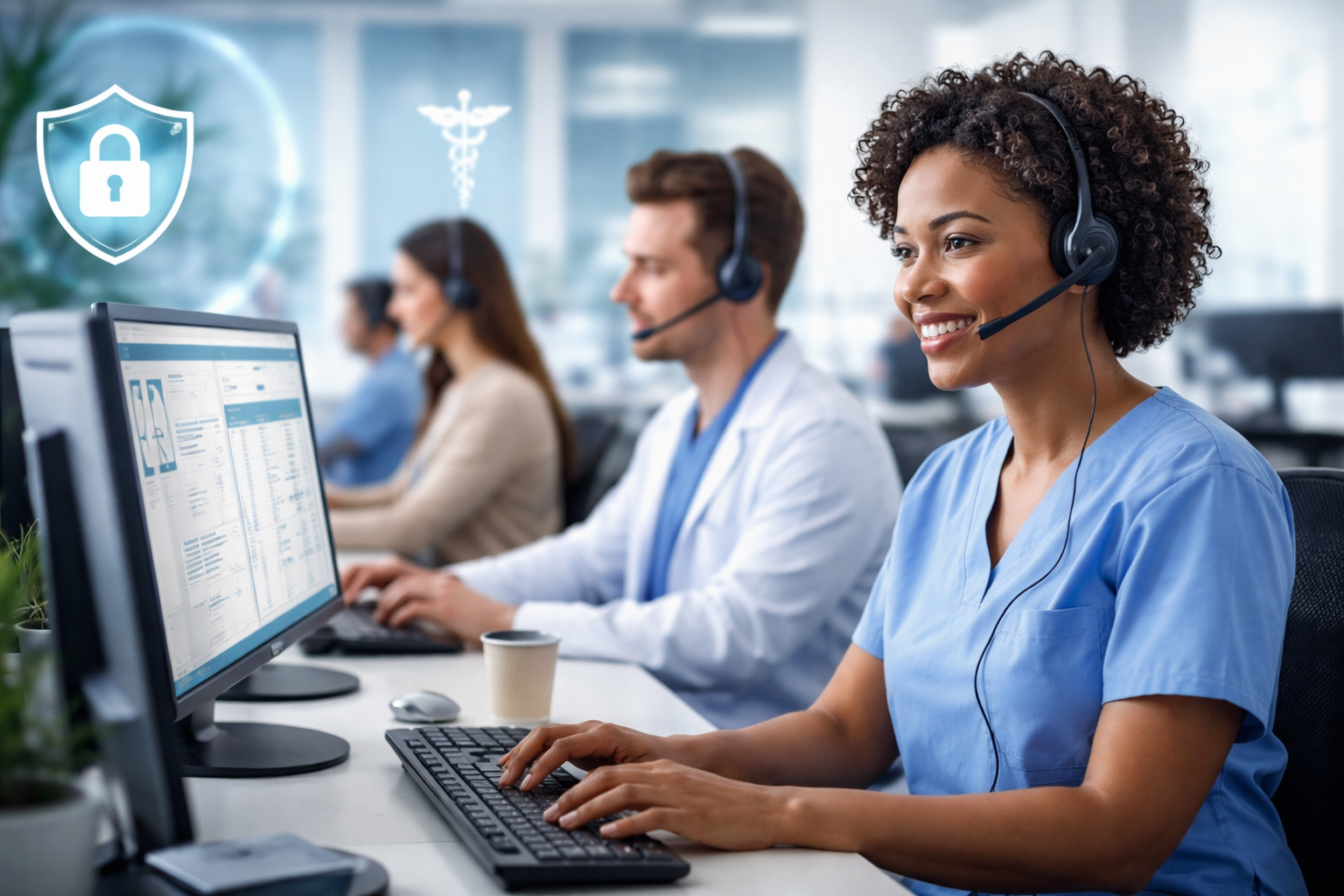
A HIPAA call center functions as an extension of a healthcare organization—not a generic answering service.
Its role includes:
-
Handling inbound patient calls
-
Supporting appointment scheduling
-
Conducting patient intake
-
Managing after-hours inquiries
-
Routing urgent calls appropriately
-
Supporting billing and insurance workflows
-
Providing non-clinical patient support
Every one of these interactions may involve PHI, making compliance foundational to daily operations.
Unlike standard call centers, HIPAA-compliant contact centers operate under strict procedural controls designed specifically for healthcare environments.
How PHI Is Handled in a Compliant Contact Center
PHI handling is at the center of HIPAA compliance.
A compliant contact center ensures that:
-
PHI is accessed only when necessary
-
Information is shared strictly on a need-to-know basis
-
Conversations are conducted in secure environments
-
Data is never written down or stored improperly
-
Call recordings are protected or disabled where required
PHI handling workflows often include:
-
Identity verification before discussing information
-
Scripted escalation paths for sensitive issues
-
Secure system access with audit trails
-
Clear protocols for transferring calls involving PHI
These workflows reduce the risk of accidental disclosure and ensure consistent compliance across every interaction.
Risk Mitigation Through Secure Call Center Workflows
HIPAA violations can result in:
-
Regulatory fines
-
Legal liability
-
Reputational damage
-
Loss of patient trust
-
Contract termination
A HIPAA-compliant contact center mitigates these risks by design.
Risk mitigation includes:
-
Limiting agent access to only required systems
-
Preventing screen sharing or recording on unsecured devices
-
Enforcing clean-desk and secure-workspace policies
-
Monitoring calls for compliance adherence
-
Regularly reviewing access logs
By embedding compliance into workflows, healthcare organizations significantly reduce their exposure—without slowing down operations.
Why Healthcare Organizations Outsource Call Center Support
Healthcare call center outsourcing has grown rapidly because maintaining compliance internally is resource-intensive.
Outsourcing allows organizations to:
-
Scale without expanding internal staff
-
Maintain consistent coverage
-
Ensure standardized compliance practices
-
Reduce administrative burden
-
Improve patient experience
Outsourced HIPAA call centers specialize in compliance. They already have:
-
Documented policies
-
Trained agents
-
Secure infrastructure
-
Proven workflows
This makes outsourcing not just cost-effective—but safer.
Medical Answering Services vs General Call Centers
Not all answering services are HIPAA-compliant.
A medical answering service differs from a general call center in critical ways:
-
Agents are trained specifically on HIPAA
-
PHI handling is governed by strict protocols
-
Systems are designed for healthcare data
-
Security controls are healthcare-grade
Using a non-compliant answering service exposes organizations to significant risk—even if calls seem “basic.”
Healthcare organizations must ensure that any third-party call support provider meets HIPAA standards end-to-end.
Compliance Failures and Their Real-World Consequences
HIPAA violations often occur unintentionally:
-
An agent discusses PHI without verification
-
Calls are recorded improperly
-
Access permissions are too broad
-
Data is transmitted insecurely
Even a single lapse can trigger audits, fines, or breach notifications.
A HIPAA-compliant contact center minimizes these risks through proactive controls, not reactive fixes.
HIPAA-Compliant Call Center Technology and Infrastructure
Technology plays a critical role in compliance.
HIPAA-compliant contact centers use:
-
Secure, encrypted communication platforms
-
Role-based access controls
-
Centralized authentication systems
-
Monitoring and logging tools
-
Secure cloud infrastructure
Infrastructure must support compliance at scale—especially for remote or distributed teams.
Security is not just about tools; it’s about how those tools are configured, monitored, and governed.
Training Requirements for HIPAA-Compliant Agents
Compliance depends on people as much as systems.
HIPAA-compliant agents receive:
-
Initial HIPAA training
-
Ongoing refresher training
-
Scenario-based compliance education
-
Clear escalation protocols
-
Regular performance reviews
Training ensures that agents:
-
Know what constitutes PHI
-
Understand when to escalate
-
Follow verification procedures
-
Avoid unauthorized disclosures
Without training, even the best technology cannot prevent violations.
Use Cases for Healthcare Call Center Outsourcing
HIPAA-compliant call centers support a wide range of healthcare functions, including:
-
Medical practices and clinics
-
Hospitals and health systems
-
Telemedicine platforms
-
Behavioral health providers
-
Medical device companies
-
Healthcare SaaS vendors
Common use cases include:
-
Appointment scheduling
-
Patient intake
-
After-hours support
-
Nurse line routing
-
Insurance verification
-
Billing inquiries
Each use case requires compliance-driven workflows.
Why U.S.-Based HIPAA Call Centers Matter
U.S.-based call centers provide additional safeguards:
-
Familiarity with U.S. healthcare regulations
-
Cultural alignment with patients
-
Clear communication
-
Reduced risk of offshore compliance gaps
Many healthcare organizations prefer—or require—U.S.-based support for regulatory, contractual, and patient-experience reasons.
How TeleDirect Supports HIPAA-Compliant Healthcare Communication
TeleDirect provides HIPAA-compliant contact center services designed specifically for healthcare organizations.
Key capabilities include:
-
HIPAA-trained staff
-
PHI-compliant workflows
TeleDirect acts as a true extension of healthcare teams—supporting patients while protecting sensitive data at every step.
Conclusion
HIPAA compliance is not a checkbox—it’s an ongoing operational commitment.
A HIPAA-compliant contact center protects healthcare organizations by:
-
Safeguarding PHI
-
Reducing regulatory risk
-
Supporting secure patient communication
-
Enhancing operational efficiency
As healthcare continues to evolve, compliant communication remains foundational to patient trust and organizational success.
Outsourcing to a qualified, HIPAA-compliant contact center allows healthcare organizations to focus on care—while ensuring compliance never becomes a vulnerability.
Call to Action
If your healthcare organization needs reliable, secure, and fully HIPAA-compliant call support, TeleDirect is ready to help.
With 24/7 U.S.-based agents, proven compliance workflows, and deep healthcare experience, we support patient communication without compromising security.
☎ 800-776-1081
🌐 www.teledirect.com
Let’s protect your patients—and your organization—together.
Frequently Asked Questions (FAQs)
What is a HIPAA-compliant call center?
A HIPAA-compliant call center follows strict administrative, technical, and physical safeguards to ensure PHI is protected during all patient interactions.
Why is HIPAA compliance important for phone calls?
Phone calls frequently involve PHI. Without compliant workflows, calls can easily lead to unauthorized disclosure.
Can outsourced call centers handle PHI securely?
Yes, if they are HIPAA-compliant. Properly trained agents, secure infrastructure, and documented procedures are essential.
What types of healthcare organizations use HIPAA call centers?
Medical practices, hospitals, telemedicine platforms, behavioral health providers, and healthcare vendors commonly rely on HIPAA-compliant call centers.
Is a medical answering service HIPAA-compliant by default?
No. Only services with documented HIPAA compliance, training, and safeguards should handle PHI.
Why choose a U.S.-based HIPAA call center?
U.S.-based centers offer stronger regulatory alignment, clearer communication, and reduced compliance risk.

Smitha serves as the CEO and CFO of TeleDirect, a premier 24/7/365 call center recognized among the Top 5 Call Centers by Forbes.com. A licensed CPA since 2007 through the California Board of Accountancy, Smitha brings over 20 years of expertise in business and finance to her leadership role.
As a results-driven executive, Smitha has a proven track record of driving profitability, fostering growth, and enhancing operational efficiency. Her strategic vision has not only improved customer satisfaction but also elevated employee engagement, creating a culture of excellence at TeleDirect. Smitha’s deep expertise in financial analysis and planning empowers her to develop innovative solutions that align the needs of clients, employees, and stakeholders.
Passionate about building lasting relationships and delivering exceptional results, Smitha remains dedicated to leading TeleDirect in setting industry benchmarks for quality and service.